
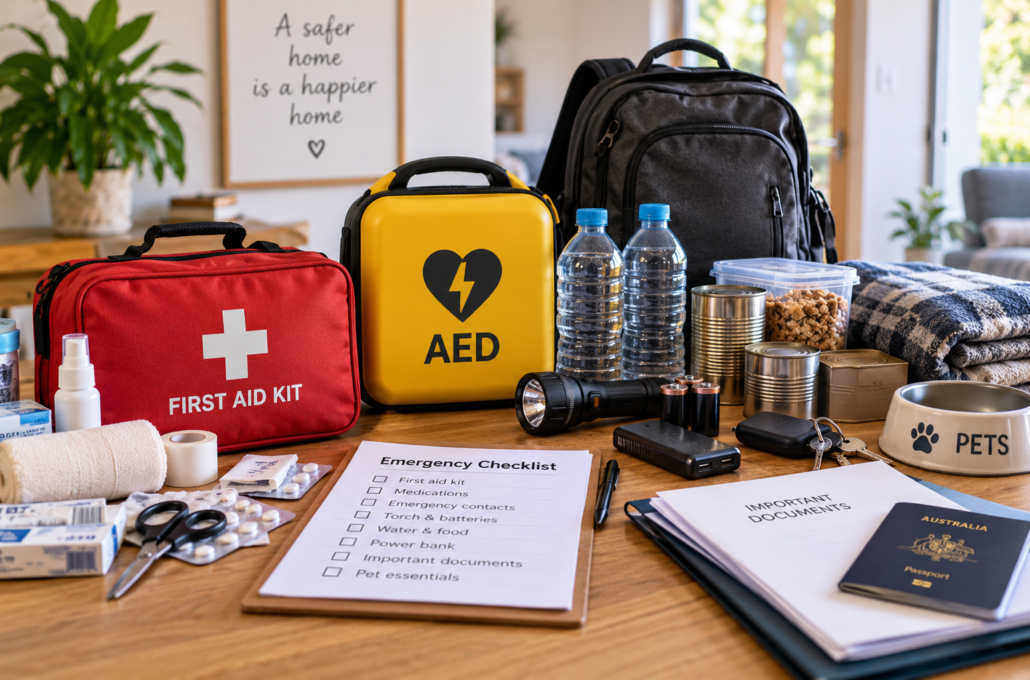
Home Emergency Preparedness Checklist for Australian Households
Emergencies rarely happen at a convenient time. A little preparation can make a major difference when someone is injured, becomes suddenly unwell, or when a household is affected by a power outage, severe weather or another unexpected event.
A well-prepared Australian household does not need to resemble an emergency bunker. The aim is simply to make sure the essentials are easy to find, important information is accessible and everyone in the household knows what to do.
Start with a properly stocked first aid kit
Every home should have a first aid kit that is easy to access and kept somewhere all household members know about.
Check it periodically rather than assuming everything inside is still usable. Replace expired or damaged products and replenish anything used.
Depending on your household, useful supplies may include:
- Adhesive dressings and sterile dressings
- Bandages
- Antiseptic products
- Disposable gloves
- Scissors and tweezers
- Saline
- Basic first aid instructions
- Any household-specific medical supplies
Keep medications separate from general first aid supplies and store them according to their instructions.
Know where emergency information is kept
In an emergency, people can forget information they normally know easily.
Keep important information somewhere accessible, including:
- Emergency contact numbers
- Family or household contacts
- Relevant medical conditions
- Allergies
- Regular medications
- GP or specialist details where appropriate
- Your home address clearly written down for anyone calling emergency services
Children and other family members should also know how to call 000.
Consider access to an AED
An Automated External Defibrillator, or AED, is designed to analyse a person’s heart rhythm during a suspected cardiac arrest and provide instructions to the person using it.
Modern AEDs provide voice or visual prompts to guide the user through the process. Perth Defibrillators supplies AEDs for workplaces, sporting organisations, community locations and households where having one readily available may be appropriate.
An AED does not replace calling emergency services or performing CPR. In a suspected cardiac arrest, call 000 immediately and follow the emergency operator’s instructions.
Prepare for a power outage
Western Australian households can experience power interruptions caused by storms, faults, bushfire conditions or other events.
Useful items to keep somewhere easy to locate include:
- Torches
- Spare batteries
- Charged power banks
- Battery or rechargeable lighting
- Drinking water
- Basic non-perishable food
- A battery-powered or alternative source of emergency information
Avoid relying entirely on your phone being charged when an emergency occurs.
Think about children, older family members and pets
Emergency preparations should reflect who actually lives in the house.
Families with young children may need additional medications, nappies, formula or comfort items.
Older people or anyone relying on medication or medical equipment may need a more detailed plan for extended power outages or evacuation.
Pet owners should consider food, medications, leads, carriers and identification.
Keep an emergency essentials bag
A small bag containing essential items can be particularly useful if you need to leave the house quickly.
Consider keeping together:
- Copies of important information
- Essential medication
- Phone charger or power bank
- Bottled water
- Basic first aid supplies
- Spare keys
- Torch
- Essential child or pet items
Do not keep original irreplaceable documents in a bag that could easily be lost. Copies or secure digital records may be more appropriate.
Moving house is a good time to review safety
Moving into a new property is an ideal opportunity to check where emergency supplies will be stored, update your address with important organisations and make sure essential items are readily accessible rather than buried in moving boxes.
Home & Gardening Australia has a useful Australian moving-house checklist covering moving-day essentials, medications, first aid, utilities and getting a new home functional quickly.
Review your plan occasionally
Emergency supplies are easy to forget once they have been put away.
Every six to twelve months, check:
- First aid supplies
- Medication expiry dates
- Batteries
- Power banks
- Emergency contact information
- Household medical information
- AED pads and battery expiry dates where an AED is installed
A five-minute check now can save valuable time later.
The bottom line
Good home emergency preparation is mostly about organisation.
Know how to call for help, keep first aid supplies accessible, consider whether an AED is appropriate for your household, maintain essential medications and make sure basic emergency equipment is ready when needed.
For advice about choosing an AED for a home, workplace, sporting club or community location, contact Perth Defibrillators.
